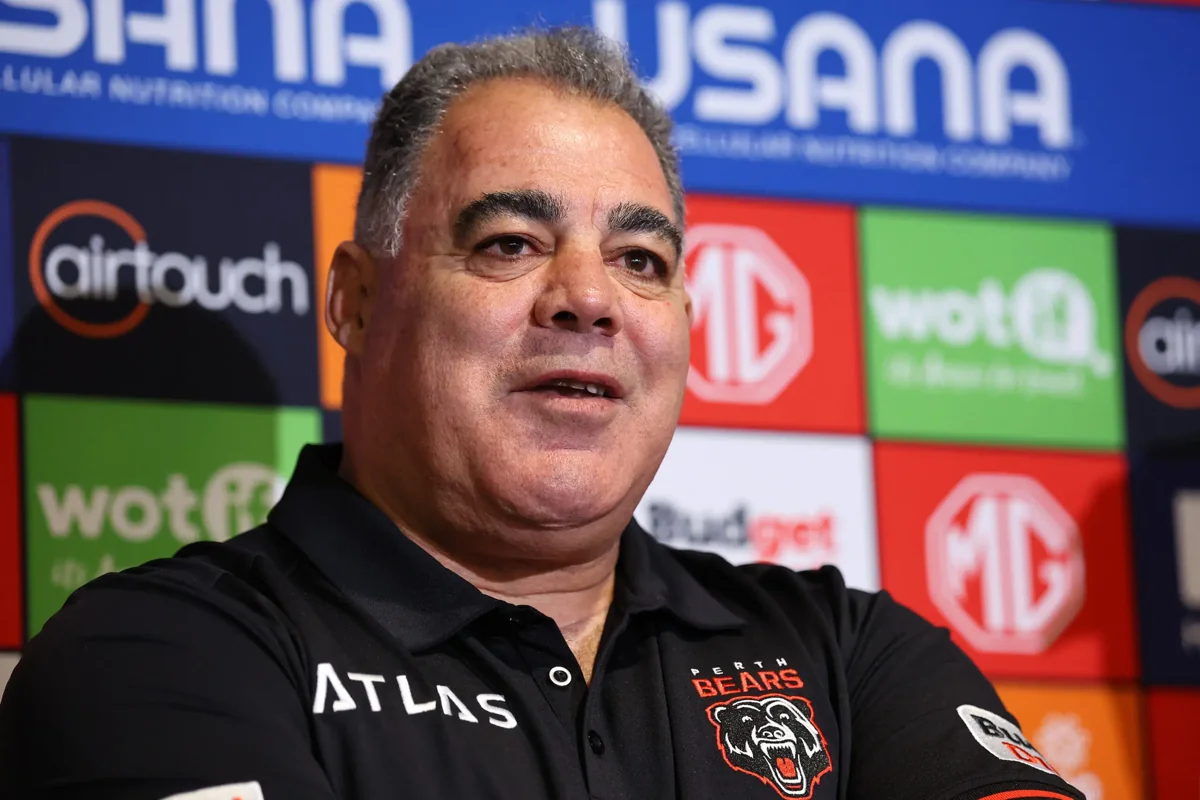
November 16 is a reported release date, not an official fixture
The useful answer for supporters waiting on the 2027 NRL draw is more precise than a date on a social-media graphic. Monday 16 November is the reported release date. That gives fans a point to watch. It does not turn every match being discussed before then into a confirmed booking opportunity.
LeagueUnlimited's running draw report attributes the date to News Corp reporting by Peter Badel. The Sporting Base's 23 October account also presents it as a report and says the NRL had not officially confirmed the date or the suggested Perth opening opponent when that account was published. Those qualifications matter more than how confidently a headline is subsequently shared.
The more recent 31 October club-requests coverage describes a mid-November release expectation. Read together, the reporting points supporters towards a likely announcement period. It does not supply an official release hour, a guarantee that nothing can change or a complete draw to plan around.
There is also a conflicting date in circulation. A 24 October report about the Tigers' possible New Zealand match names 12 November. That secondary account does not establish official confirmation either. The disagreement is a reason to retain the distinction between a reported date and a league announcement, rather than quietly turn the more frequently repeated forecast into a guarantee.
What would count as confirmation?
A dated league announcement is the next level of evidence for the release itself. The actual published fixture then answers a different set of questions: which clubs meet, on what date, at which ground and with what kick-off time. A promise that the draw is coming and an entry in that draw are not interchangeable pieces of information.
This is also why five pages repeating the same scoop are not necessarily five independent confirmations. Check where each account says the information originated. If the chain leads back to one report, the story may still be useful and well sourced. Its status remains reporting rather than an announcement from the body making the schedule.
Supporters do not need to ignore those reports. They can mark the expected release, discuss which away trips they want and prepare the questions they will ask once the fixtures arrive. The mistake is allowing an expectation about publication to become certainty about an individual Saturday. The two decisions require different facts.
For example, a group can agree that a Perth trip is its first preference without knowing the Bears' opening opponent. It cannot yet establish that a short visit fits everybody's leave simply by assuming the match will be on the most convenient day. That is a planning distinction, rather than a judgement about the quality of the reporting.
The best habit is to keep three labels visible: confirmed, reported and requested. They are not ratings of how exciting a match sounds. They describe how much authority the available information carries. Maintaining that separation now makes the eventual release easier to read, and prevents a perfectly sensible early conversation from becoming an expensive misunderstanding.
The pieces of 2027 that are already worth separating
Waiting for the full draw does not mean that nothing about next season is known. It means the confirmed pieces need to be identified on their own terms. An event date, a new club's entry and a venue commitment can all be reliable information while leaving important details unanswered.
The clearest example is the NRL's official Las Vegas event page. It confirms Saturday 27 February 2027 locally at Allegiant Stadium, with Melbourne playing Wests Tigers and Parramatta facing Gold Coast. Bradford and Leigh are also part of the event, but their contest is Super League football. Three games on the event programme do not become three games in the NRL competition.
For Australian supporters, the overseas date needs attention before it becomes a diary entry. The event's local day and the date on an Australian screen are different questions. A confirmed event date also does not, by itself, tell somebody the exact start of the match they want or the applicable Australian broadcast. Use the eventual specific match listing for those details rather than construct them from the order of team names.
Perth's entry belongs in another column. The ARLC's expansion announcement confirms the Western Australian franchise joins in 2027 as the eighteenth team. It establishes participation in the competition. It does not establish the first opponent, the first away trip or the number of consecutive home matches at the start of the season. Those are fixture decisions still requiring their own evidence.

The Warriors provide a useful third case. Their official Eden Park announcement confirms the 2027 Anzac Day match will be at that ground. The same announcement says the opponent and ticketing details will accompany the draw. Supporters can be certain about the venue commitment without pretending the whole match has already been described.
That distinction has practical value. Someone interested in a family visit to Auckland can investigate the destination while waiting for the remaining football details. Someone whose decision depends on the opponent or ticket conditions still has a reason to wait. Neither person needs to label the entire announcement either completely settled or entirely speculative.
Keep separate competitions separate as well. A State of Origin event, an international tournament or a preseason match may be important to your calendar, but it does not automatically belong in your club's Premiership match total. A season guide that mixes those programmes can look full while giving the wrong answer to a simple question about how often your team plays.
The standard should be straightforward: attach each claim to the announcement that actually confirms it. Once that is done, the gaps become visible. Visible gaps are useful. They tell a supporter which decisions can move forward and which ones still depend on the full draw.
Club requests are clues, not fixtures
The most entertaining part of draw season is often the list of matches clubs want. It reveals what they value: a rivalry, a commemorative occasion, a developing market or a crowd-friendly start. It is useful football news. It becomes unreliable travel information when the word requested disappears between the original report and the version passed around a group chat.
Why a marquee request is not a promise
The October club-requests report gives a concrete example through the Roosters. It attributes to chief executive Joe Kelly a preference for hosting Wests Tigers on a late-season Sunday at 4pm for the Emergency Services occasion, and for meeting Canterbury in Indigenous Round. That describes a club making its case. It is not the published allocation of either match.
A supporter can see why a club would pursue a recognisable occasion. A familiar opponent and a recurring event can help people organise their season and give the match a story beyond its ladder implications. Another club can have a different priority on the same weekend. The schedule has to fit more than one club's preferred version of the year.
That does not mean every rejected request would prove unfairness, or that every accepted one would prove favouritism. To judge the final outcome, supporters need the actual allocations and the relevant comparison. A list of ambitions is evidence about what clubs asked for. It is not evidence that the league has already granted the most commercially attractive requests.
The same discipline applies to Perth's reported preference for consecutive home games. The idea has a clear inaugural-season appeal, but the appeal is not its confirmation. Until the schedule is released, keep the proposed sequence separate from the confirmed fact that the Bears enter the competition in 2027.
A stadium explanation still needs the right date
Venue news can be firmer, provided it comes from the right announcement. Wests Tigers' September statement sets out a 2027 arrangement centred on Campbelltown and CommBank while Leichhardt is redeveloped. That is more useful than carrying an old stadium option into a new season without checking whether the club has since updated it.
Even then, a confirmed ground arrangement is not necessarily a complete list of dates and opponents. The Tigers' statement also discusses an additional match being taken on the road without naming that venue. The sensible reading preserves both facts: the club has made firm venue commitments, and one part of the programme was still unresolved in that announcement.
There is a telling contrast in the Warriors coverage. A secondary requests story describes hopes for Eden Park, whereas the club's earlier official statement had already confirmed the ground for its Anzac Day game. The newer date on a general news report does not automatically make every detail in it more authoritative than the specific announcement.
For supporters, this is a reason to read past the headline, rather than a reason to distrust all fixture reporting. Ask what is being confirmed, by whom and for which season. A stadium constraint can explain why a match cannot happen in one place without proving that a particular alternative time or opponent has already been chosen.
What fans can plan before the full draw arrives
Start with the commitment that makes the trip worthwhile. If the purpose is to see one club at one ground, the missing match time may be decisive. If football is one part of a longer visit, a confirmed city or event date may already justify some research. The amount of certainty required depends on the decision, not simply on how much of the season has been announced.
There is a useful three-stage approach. First identify the experience you want: the Bears' debut, a rivalry away game, a particular stadium or a festival weekend. Then list the facts already confirmed for that experience. Finally identify the remaining fact that would change your willingness to commit. For one person it will be the date; for another it might be the opponent, a ticket entitlement or the return journey.
A couple considering Las Vegas already have more event information than supporters choosing an ordinary late-season away trip. That does not make every Vegas offer equivalent. The official page separates standard tickets, hospitality and travel packages. A package's inclusions need to be read as inclusions, rather than treated as the unavoidable cost of attending the game.
The same page advertises tickets from USD29 with handling fees and charges applying. The currency and qualification belong beside the figure. It is not an Australian-dollar price for an entire trip, and it is not a promise that every seat remains available at the starting price. The worthwhile comparison is between the actual products available to the group, with their current conditions.
For other matches, the 2027 draw page currently says fixtures are not available here yet. A page title containing the words full season is not a substitute for populated match information. Check the entries and the accompanying status message. The absence of a match on an independent guide should also be distinguished from an official cancellation or an announcement that it will never take place.
Where a plan must remain provisional, make that visible to the people sharing it. Agree whether the trip would still be worthwhile if the match falls outside the proposed visit. Check the conditions of any booking before assuming it can be changed without cost. An unpublished football timetable does not create a universal cancellation right for a separately purchased flight or room.
It can be useful to prepare two complete options rather than one imagined ideal. A short trip may be attractive if the eventual start allows a comfortable return. A longer trip may work if the match is later. The comparison should include the next day's commitments and the whole group's tolerance for uncertainty. It does not require inventing a likely kick-off.
Most importantly, decide in advance what information would turn research into a booking. That is a much better use of the waiting period than repeatedly refreshing a page and becoming more committed to an assumption each time. The draw release should answer the missing question. It should not be asked to rescue a plan whose essential conditions were never checked.
How to read the release when it finally lands
The first reaction to a draw is usually to find the match you most wanted. Keep doing that. Then take a second pass through the details that determine whether the season works for you. A marquee opponent can be exciting while the start time, ground or surrounding travel makes attendance a different proposition from the one imagined in advance.
Check the detail behind the headline match
For each priority game, note the actual date, venue and kick-off zone. A city selector changes the clock displayed on a fixture guide; it does not change the location of the match. Where daylight saving or overseas travel is involved, compare the dated local listing with the time used in the rest of your itinerary. A round number alone does not resolve that comparison.
Next look at the surrounding sequence. A club receiving an attractive home opponent can still face a difficult run elsewhere. A supporter planning an away weekend might care more about the exact day than about which other match receives the showcase slot. Make the comparison that answers your question instead of treating one headline as a complete verdict on the draw.
Byes need their own attention. They are scheduled rounds off, rather than postponed matches waiting for a replacement date. Do not assume that expansion automatically settles the number or placement of them. Read the structure the NRL actually publishes, including any arrangements around representative football, before comparing one club's workload with another's.
Then check viewing separately from attendance. The television guide distinguishes a viewer's market from the time zone shown on screen. A confirmed match start does not establish whether a particular service has it live, free or on delay in your location. Likewise, a familiar previous-season viewing habit should not be used as a substitute for the current listing.
Once the plan is coherent, choose how to keep it current. The calendar guide explains that subscribing can receive later changes when the calendar application refreshes, while importing a downloaded file creates a one-off copy. An application may lag behind an update. Before committing to travel, check the current match information directly rather than expect the calendar to act as an instant alert.
It is worth keeping a dated version of any comparison used in a fixture complaint. State which games you counted, what you mean by home or away, and whether the issue is travel, rest, exposure or access. That makes the argument easier for a club to address. An unfulfilled request and a genuinely difficult sequence can both be disappointing, but they are different findings.
The release should ultimately replace speculation with usable detail. Until that happens, the strongest guide is one that shows exactly where certainty ends. November 16 is a useful reported date to watch; the official announcements and eventual match entries are what turn the anticipation into a season supporters can actually organise around.
Join the conversation
Have a question or a matchday tip to share? Keep it friendly and on topic. Comments appear after review.
No comments yet. Start the conversation.
Sign in with Google to leave a comment.