
What is confirmed about Perth's first season
The Bears' first NRL draw will be doing several jobs at once. It must introduce a new Perth club, give its players a workable competitive assignment and offer supporters on opposite sides of the country a way into the season. That is why the opening opponent matters, but cannot be the whole assessment.
The firm starting point is the ARLC's official expansion agreement: the Western Australian franchise joins the Premiership in 2027 as the eighteenth team. Its announcement explicitly connects a Perth-based club with the heritage of the North Sydney Bears. Both parts belong in the story. This is a new regular presence for the competition in the west and a familiar identity returning for people with a much older attachment.
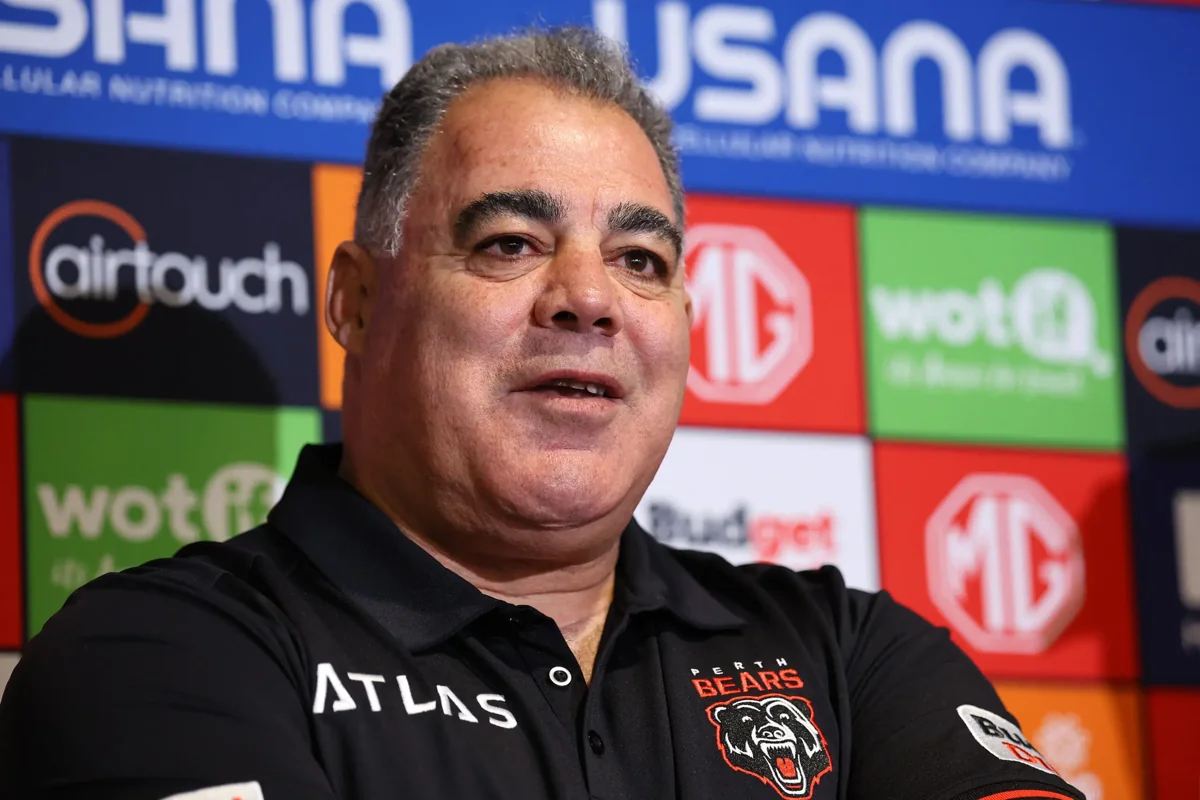
The football organisation has also moved beyond an abstract licence. The official January announcement of Tyran Wishart and Nick Meaney identifies Mal Meninga as head coach and confirms the two Melbourne teammates' deals start in 2027. That is evidence of recruitment for the inaugural side. It should not be mistaken for a complete, up-to-date final squad list.
Those are different kinds of certainty from a fixture allocation. The club's participation and announced recruits can be established before its first opponent, first away ground or opening sequence is published. A story that combines the two without labels can make a likely match sound as firmly settled as the franchise's entry.
For supporters, the useful question is therefore what remains to be decided. Which matches can local fans build a routine around? How often will the team cross the country in a demanding part of the season? Which eastern trips will matter most to people who followed the Bears before Perth had this team? The full draw supplies the inputs for those judgements.
There is a football reason to look beyond the launch occasion. A new side must establish combinations, responsibilities and standards under match pressure. Familiar teammates can bring shared understanding, but that does not automatically transfer to every relationship in a new seventeen. The first month will be an examination of how the team plays together, not simply whether its opening opponent was selected for a compelling headline.
Expansion also changes the setting of the draw without answering every structural question. Eighteen clubs do not, on their own, specify the number or placement of byes, the treatment of representative weeks or the distribution of return meetings. Those details belong to the actual schedule and its announced format. Avoid filling them in from what would seem mathematically convenient.
A fair first verdict will keep three issues in view: the opportunity to establish a home audience, the competitive burden across the season and the different access needs of the people being asked to follow the Bears. One opening match can contribute to all three. It cannot settle all three.
Two opening home games would help, but the draw still has to earn that verdict
The 31 October club-requests report says Perth is looking at consecutive home games to begin its season. It also describes South Sydney as the likely first opponent. At this stage, those are reported possibilities. They should be discussed as potential choices rather than the first two lines of a confirmed fixture list.
The attraction is easy to understand. One launch match can generate curiosity. A second local occasion soon afterwards gives somebody who enjoyed the first a reason to return while the experience is fresh. It also gives a supporter who missed the opening event another near-term opportunity to see the new club. Those are sensible audience-building reasons to value the sequence, without inventing a ticket-sales forecast.
Building a home routine is different from guaranteeing home wins
For the playing group, fewer journeys in the opening sequence could simplify the practical assignment. But it would not remove the need to defend sets, make good decisions under fatigue or execute the kicking game. A favourable location is not a substitute for a functioning side. The quality of the opposition and the team's own preparation still determine what the home opportunity becomes.
Nor is a new club automatically enjoying the same familiarity as a long-established home team. Supporters can reasonably hope the ground becomes an advantage while recognising that the Bears are still building their match-day habits together. The distinction keeps the discussion grounded: location offers an opportunity, and performance has to convert it.
There is a supporter-side equivalent. Local fans may welcome two early games, but some eastern supporters will be making a different calculation about when they can visit. A person travelling specifically for the inaugural match has a different objective from someone who wants to combine more football in one stay. A sequence that suits one group does not demonstrate that the other has been ignored.
Any assessment must then look beyond the opening fortnight. If two early home matches are followed by an awkward run of away travel, the initial convenience may tell only part of the story. That is a conditional comparison to make when the draw arrives, not a claim that such a run has already been allocated. The dates and grounds are the evidence needed to test it.
Ask the same question of a single early away game. Depending on the surrounding sequence, it might be manageable or form part of a harder assignment. Calling every away fixture a burden of equal size would erase the very geography and timing that make Perth's case distinctive. The meaningful unit is the run of matches, rather than the home label on the first one.
The fairest position before the release is therefore supportive but provisional. Consecutive home games have a coherent purpose for an inaugural club and its local audience. Their value should be judged alongside the rest of the schedule, the opposition and the actual opportunities supporters receive to attend. Two home labels alone cannot certify that the draw has been kind, harsh or balanced.
Souths or Manly? The debut is doing more than selling one match
A first opponent becomes part of a club's memory. That makes the reported South Sydney possibility interesting even before it is confirmed. It also explains why another name, Manly, appears so quickly in the discussion. The argument is not simply which visiting club could attract attention. It is which story the new Bears should begin by telling.
A new Perth audience and an inherited Bears audience
In the actual supporter discussion around the reported opener, some contributors wanted Manly because of the North Sydney history. Others preferred saving that meeting for later, or questioned whether an old Sydney rivalry would matter as much to a new Perth audience. There were also people simply interested in travelling west. The thread contains disagreement, not a single verdict from the market.
The official expansion rationale combines Western Australia with Bears heritage, so neither audience is an accidental part of the project. Yet acknowledging both does not mean assuming they want identical things from the first match. Someone reconnecting with a childhood club can attach meaning to an opponent that a new local supporter has no reason to regard as special.
That difference is a challenge for the presentation, not proof that the two identities cannot coexist. Explain the heritage clearly and let the Perth experience develop its own substance. A rivalry can be introduced through history while a local crowd forms its attachment through the matches it actually sees. The first result and the manner of the performance will create fresh material too.
A rivalry does not have to be used immediately
There is a coherent argument for placing a major rivalry in the opening game: an inaugural occasion is remembered, and its opponent becomes part of that memory. There is an equally coherent argument for separating the launch from another attractive fixture so that each has its own occasion. Neither argument establishes the attendance either match would achieve.
The decision also has a location dimension. A Bears supporter in Sydney might particularly value an eastern meeting they can attend. A Perth supporter might want the first major rivalry at the new home. Those are different access questions, and they should be stated honestly. A preference for one does not make the other person's connection less legitimate.
Be careful with the stronger historical claims in fan discussion. A comment about what another club did decades ago is evidence of how that supporter feels; it is not, by itself, a complete historical account. The useful editorial point here is the strength of the attachment and the competing expectations it creates, rather than repeating every allegation as established fact.
Whichever opponent is eventually confirmed, the club cannot outsource the whole task of becoming Perth's team to a promotional label. The game must be worth attending as a live sporting experience. Heritage can enrich that experience. The rugby league played in front of the new audience is what gives the next meeting a meaning of its own.
Travel fairness has to be measured across the whole run
Perth's location gives the travel debate a clear basis. It does not provide a complete answer about the difficulty of a particular fixture. Counting away labels alone cannot distinguish a well-spaced sequence from a tight one, or show what an opponent has done before meeting the Bears.
When the 2027 draw is available, start with a window of several matches. Write down the actual grounds, dates and scheduled starts. Mark the journeys between them, then distinguish what the fixture establishes from the itinerary a club may eventually choose. The venue list is public information. A precise flight booking or decision to remain interstate requires further reporting.
Compare the opponent's assignment as well
A short turnaround is a description of one side's calendar. Competitive comparison needs the other side too. If Perth has a difficult sequence before a home match, check whether the visitor is arriving after a similarly tight interval or a more generous one. That does not make the Bears' travel disappear. It changes the claim being tested from an absolute burden to a relative preparation question.
| Question | Information needed | What it cannot establish alone |
|---|---|---|
| How tight is the turnaround? | Both dated kick-offs in a common time zone | Every hour actually available for recovery |
| Where does the journey sit? | Grounds across the surrounding matches | The club's booked flights or training plan |
| Is one side better placed? | The opponent's comparable sequence | A guaranteed effect on the result |
| Is the burden concentrated? | A longer run of the published draw | The complete season from the opening game alone |
Time zones deserve particular care. A Perth evening and an eastern evening are not automatically the same national viewing time. Likewise, counting hours between two starts requires converting both to one reference. A calendar-day comparison and an elapsed-hours comparison can each be useful, provided they are labelled and not switched midway through an argument.
Supporters may ask whether consecutive eastern matches could be grouped into one trip. That is a sensible question to put to the club once the draw is known. It is not a reason to assume the team will stay away, or that a longer period away from home has no cost of its own. A fixture can make an option possible without proving it is the option the football department will choose.
Finally, keep workload and performance connected without confusing them. Travel can make an assignment harder to manage; the public draw does not identify the cause of an individual injury or explain every missed tackle. Opposition pressure, selection and execution still matter. The strongest fairness argument documents the sequence and its comparison, then states clearly which consequences remain uncertain.
A supporter's checklist for the Bears' first draw
Choose the question you want the release to answer before it arrives. A local supporter may want a regular home routine that fits work and family. An eastern Bears supporter may care most about the first match they can reach without crossing the continent. Someone planning the inaugural occasion needs the exact day, ground and ticket arrangements. Those priorities can coexist without producing one universally convenient schedule.
Start by finding the actual first home match and first away match, then check the surrounding games. Record which parts are officially confirmed. A report about a preferred opponent should not survive in a personal itinerary as though it were the final release. Likewise, a home designation does not establish an admission benefit attached to a particular membership product.
For the eastern trips, use the actual ground rather than the heritage story to decide what is accessible. A wish to see the Bears at North Sydney Oval is not evidence that a Premiership match has been allocated there. Wait for the venue announcement and read the terms attached to any ticket or membership offer. An emotionally appealing assumption is still an assumption.
For a Perth visit, consider the whole stay. If the first match is the purpose of the journey, protect the ability to watch it in full. If the attraction is a longer football holiday, compare the games that genuinely fall inside the dates available to your group. A return booking needs to work after leaving the ground, rather than merely after the scheduled kick-off.
Viewing from home requires a separate check. The TV guide distinguishes the displayed clock from the viewer's market. A convenient Perth start does not automatically establish free live television in another state. Find the current match listing, service and live or delayed description rather than assume that a launch game receives the same treatment everywhere.
When the fixtures are ready, the calendar tools can help organise them. A subscription can receive changes when the calendar app refreshes; importing a file gives a one-off copy. Neither removes the need to check the current match details before travelling. Keep that role modest and useful: the calendar organises the plan, while the actual fixture remains the reference.
Finally, judge the first draw against standards you are willing to apply consistently. Look for a reasonable opportunity to build the home audience, an explainable distribution of travel and meaningful access for the supporters the club wants to retain. Recognise a favourable sequence as readily as an awkward one. The opening opponent will give the season a story. The rest of the draw will show how the Bears are being asked to live it.
Join the conversation
Have a question or a matchday tip to share? Keep it friendly and on topic. Comments appear after review.
No comments yet. Start the conversation.
Sign in with Google to leave a comment.